
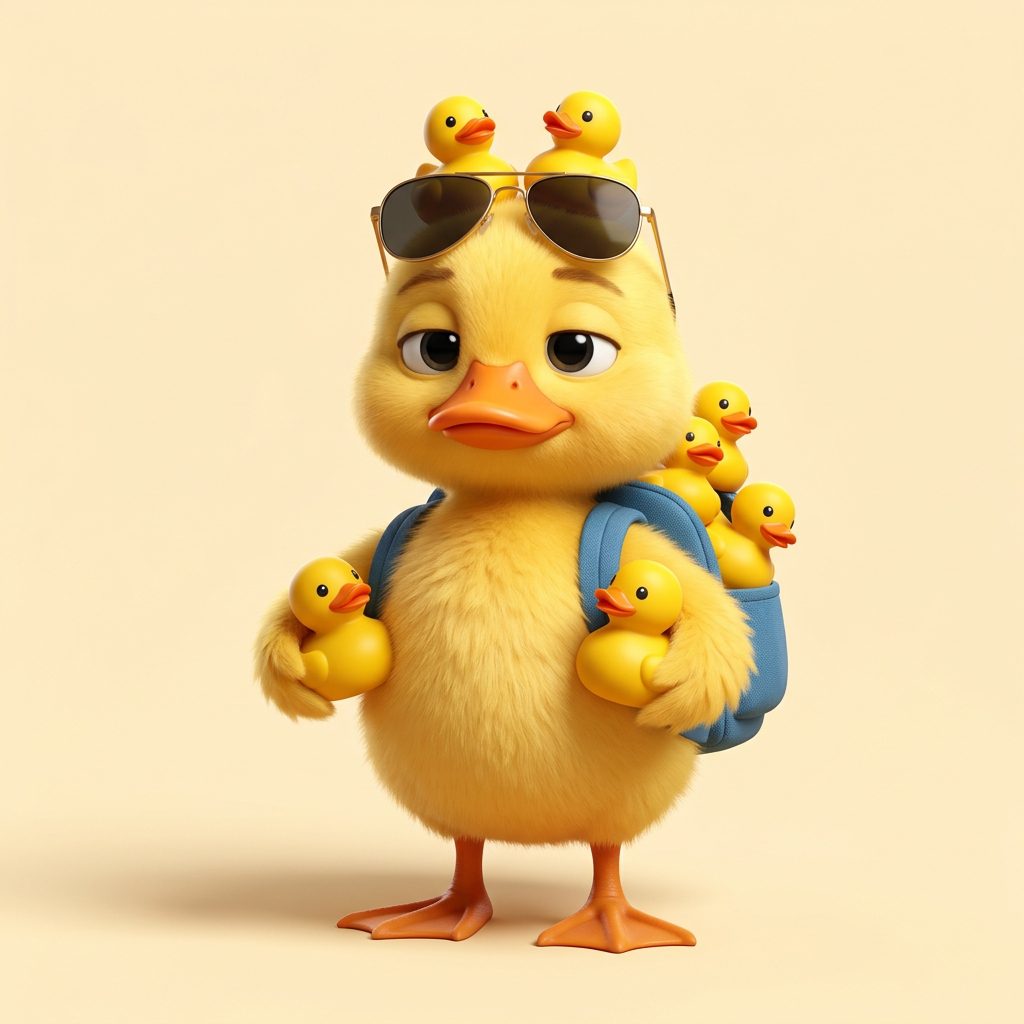
The title of the book was meant to be temporary.
The working title was something more sensible. The Boundaries Book, briefly. Stop Saying Yes, for about a week. People Pleaser Recovery, for an afternoon. The publisher would have been happier with any of those.
The actual title arrived as a joke between me and a friend over a beer about three drafts in. The friend was telling me about a colleague who had said yes to one too many things and finally cracked at her desk on a Thursday afternoon. The colleague’s phrase, as my friend reported it back, was “hold my ducks.” She did not mean “hold my drink while I deal with this.” She meant something more like “these are the things I have been carrying for everybody else for years, and you can hold them now, because I am done.”
The phrase did not leave my head for a week.
By the time I sat back down to the draft, the book had a new title and a new opening line. The opening line, more or less, was the colleague’s phrase, repurposed. The book stopped being about boundaries in the abstract and started being about ducks. The ducks were everything anyone had ever handed to the reader that they had said yes to without meaning to.
That was the unlock. Once the metaphor landed, the rest of the book wrote itself in about six weeks.
Why it is a joke and also exactly the subject
The title sounds like a joke. It is. It is also exactly the subject of the book, which is a thing the best titles do.
If I had called the book Stop People Pleasing, half the audience who would benefit from reading it would have walked past it on the Amazon shelf because they do not recognise themselves as people-pleasers. They recognise themselves as the responsible one. The capable one. The friend who follows through. The colleague who picks up the slack. Those are not the same word as “people-pleaser,” in the head of the person they describe, even though they are functionally the same thing.
Hold My Ducks reaches that audience because the metaphor lands without forcing them to identify with a label they would rather not wear. They do not have to admit they are a people-pleaser to admit they are holding too many ducks. The duck is the gentle interface to a subject the reader did not want to walk straight at.
This is the whole job of a title in self-help. The title has to bypass the part of the reader that would rather not be reading the book. Self-help titles fail when they are too direct about the diagnosis. They succeed when they offer a side door.
Three things in this book that are not in other boundaries books
The boundaries genre is full. There are books by Nedra Glover Tawwab, Melissa Urban, and a dozen others. They are good books. Hold My Ducks is not trying to replace them. It is trying to do a thing the others, for the most part, do not do.
One. Hold My Ducks has the actual sentences. The exact wording you say at the moment of the no. Most boundaries books tell you to say no. Hold My Ducks gives you the page of scripts, written for the specific situations the reader is most likely to face. The colleague at the desk. The cousin on the phone. The text at 11pm. The page of scripts is what readers tell me they fold the corner of.
Two. The duck count. A small, deliberately silly inventory of what the reader is carrying. Most readers, the first time they do the count, get to fourteen. Some get to thirty. The duck count is not a productivity tool. It is a permission tool. Seeing the list lets the reader see what they have actually agreed to. Half of it surprises them. That is the device.
Three. The chapter on what happens after you say no. Most boundaries books end at the no. Hold My Ducks opens at the no and spends most of its pages on what happens five minutes later. The guilt. The pre-emptive apology. The silent caving on the second ask. This is the part most boundaries books do not have, and it is the part most readers actually need.
A passage from the book
This is from chapter three. Reproduced here without the footnotes, which are funnier than the chapter they are attached to in places.
You are not their life jacket. You are not the colleague who fixes their job for them, the friend who fixes their relationship for them, the sibling who fixes their relationship with your parents for them. You are not the person who is supposed to absorb the consequences of everybody else’s decisions. You are not the duck-holder. You are the person handing the ducks back. This is a more difficult job than holding them. It is also the right one.
If this is yours, the rest is in here. The book is on Amazon, and there is a fuller version of this story in the back-matter of the paperback edition, which I am told a small minority of readers actually read.
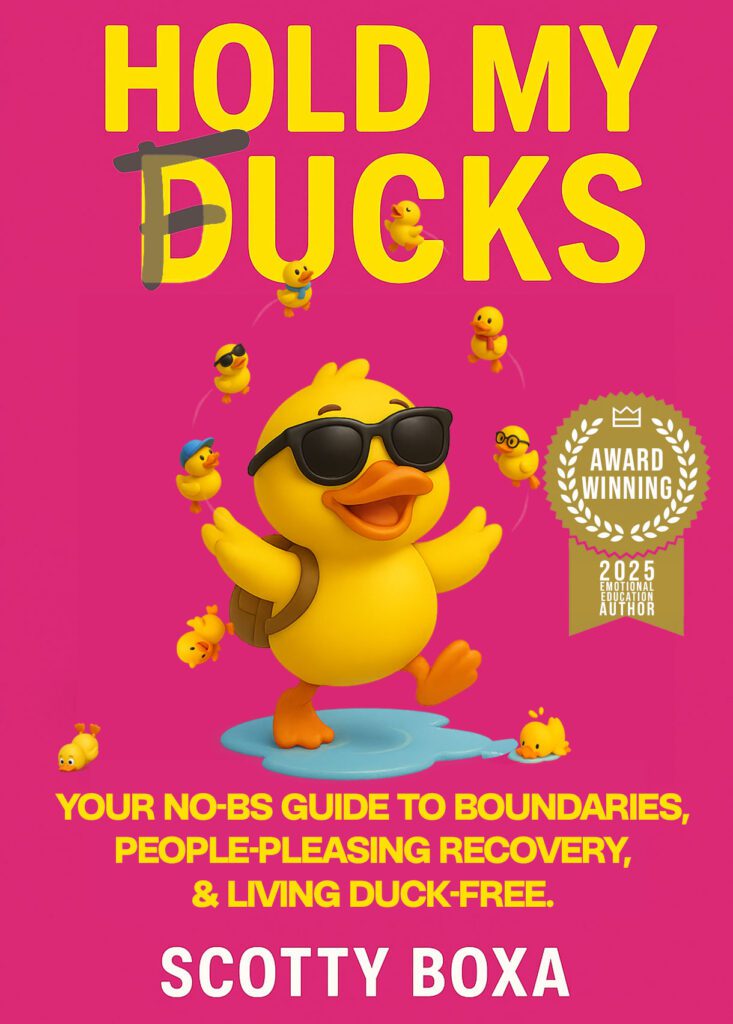
Hold My Ducks
Stop People Pleasing, Set Boundaries, and Reclaim Your Energy
Read the book page → Get on Amazon →