

There is a type of friendship most books do not name. It is the friendship where one person calls and the other person answers. The same direction, every time. The phone is always going one way.
If you are the one being called, this article is for you.
What it is not
It is not a friendship that has gone wrong. The friendship is fine. The other person is not a villain. They love you. They send you a card on your birthday. They mean it.
What is wrong is the geometry. The geometry is the part that is unsustainable.
What it actually costs
Helping a friend through a hard week is fine. Helping a friend through their hard week, every week, for nine years, while never being asked about your own, is not fine. The thing it costs is harder to name than the obvious things.
It is not the time. The calls are short.
It is not the energy. You like helping. You always have.
It is the residue. The slow build-up of having held a hundred small storms and never been asked whether you had your own. The residue is what people mean when they say they cannot do it anymore. They do not mean they cannot do the helping. They mean they cannot do the not-being-asked.
The line that is the diagnostic
There is one line that will tell you whether you are in this. The line is: when was the last time someone asked you how you were and you told them the truth?
If you cannot remember, you have your answer.
It is not that nobody asks. They ask. You say “good, you?” You always have. You said it last Tuesday. The asking has become a script you both perform. The truthful answer would be too long, and the asker is not really asking, so you do not really answer. This is not anybody’s fault. It is what happens to long friendships where the geometry never got renegotiated.
What the books usually say here
The standard advice is to ask for what you need. Communicate. Be direct. Tell your friend you would like the conversation to go both ways more often.
This is technically correct and almost impossible. Asking for what you need when you have never asked for what you need is not a five-minute task. It is a several-month-long renegotiation of the entire shape of the friendship. The books that pretend it is a five-minute task are doing you a disservice.
Where to start
Start with the line above. The next time someone asks you how you are, tell them one true thing. Not a confessional. Not a venting session. One true thing.
“Honestly, this week has been heavy.”
“I have been a bit flat. Nothing dramatic, just flat.”
“I am tired. Sleep is fine, the tired is something else.”
One sentence. Watch what happens. Some friends will catch it and ask more. Some will not. The ones who do not are not your bad friends — they are the friends with whom the geometry has not been renegotiated yet, and you have not given them the chance. The renegotiation begins with the first true sentence.
If this is the pattern you live in, the book that talks about it most directly is The Strong One Is Tired. The book’s subject is the burnout that nobody calls burnout because the person experiencing it is still high-functioning, still answering the phone, still being The Reliable One. The book is for the friend everyone calls. If that is you, the link is below.
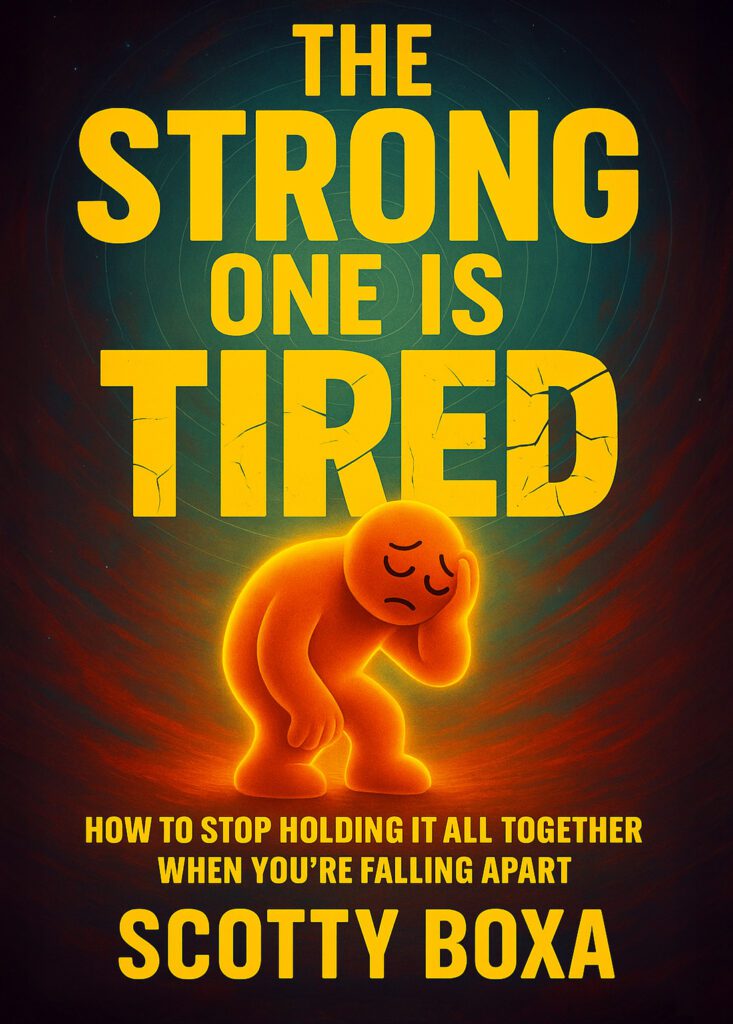
The Strong One Is Tired
When you are the one everybody else calls.
Read the book page → Get on Amazon →