

Most people use “tired” and “burnt out” interchangeably. They are not the same. The cure for one is not the cure for the other. Picking the wrong one is the most common reason rest stops working.
The short version
Tired is a state your body gets into when you have not slept enough or have spent more energy than you have available that week. A weekend fixes tired. Two nights of decent sleep, a long walk, food you did not have to make yourself, and tired is usually gone.
Burnt out is a different beast. Burnt out is what happens when the system you are operating in stops giving back what you put in. It is not about how many hours you have slept. It is about whether the work you are doing is recharging anything at all. Sleep is necessary but not sufficient. A weekend does not fix it. A week does not fix it. Sometimes a year does not fix it.
The diagnostic
The clearest test: have a real weekend. Two days off. No work, no errands, no obligations. Sleep in. Read a book. Walk somewhere. On Sunday night, ask yourself how you feel.
If you feel restored, you were tired. Congratulations. Continue.
If you feel exactly the same as you did Friday — or worse, because now you are facing Monday — you were not tired. You were burnt out. Rest does not fix burnout. Rest is a precondition for fixing burnout, but it is not the fix.
Why this matters
It matters because the burnt-out person who keeps prescribing themselves “a good weekend” keeps getting frustrated when the good weekend does not work. They take the weekend. They follow the rules. They drink water, they go for a walk, they read a novel. They feel the same on Monday morning. They conclude something is wrong with them.
Nothing is wrong with them. The dose was wrong. They were taking the wrong medicine for the wrong condition.
What burnout actually needs
Burnout needs the input-output ratio to change. Either you put in less, or you get more back, or both. Rest does not change the ratio. Rest just lets you keep operating in the unchanged ratio a little longer. Which is why so many burnt-out people rest, return to work, and burn out again three months later.
The fix is structural. The structure is what work you are doing, who you are doing it for, whether the doing of it is giving back anything other than money. None of this is what self-help books usually talk about. Most self-help books treat burnout as a personal failure to be solved with better habits. It is not a personal failure. It is a structural mismatch between what is going out and what is coming back.
Which book
If you read the diagnostic above and recognised yourself as burnt out, the book on this topic in the Waddle Forward series is The Strong One Is Tired. It is the burnout book, written specifically for the people who do not look burnt out from the outside because they are still showing up. The book’s premise is that the strong one is the one most likely to burn out and least likely to be told they have. If that landed, the link is below.
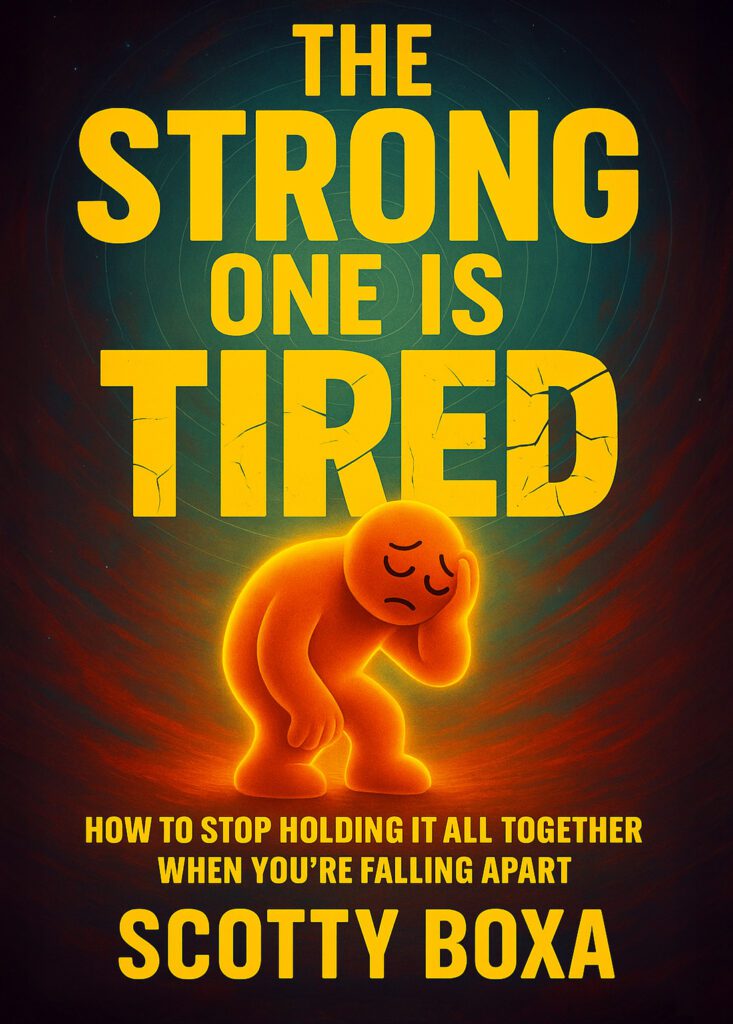
The Strong One Is Tired
When you are the one everybody else calls.
Read the book page → Get on Amazon →